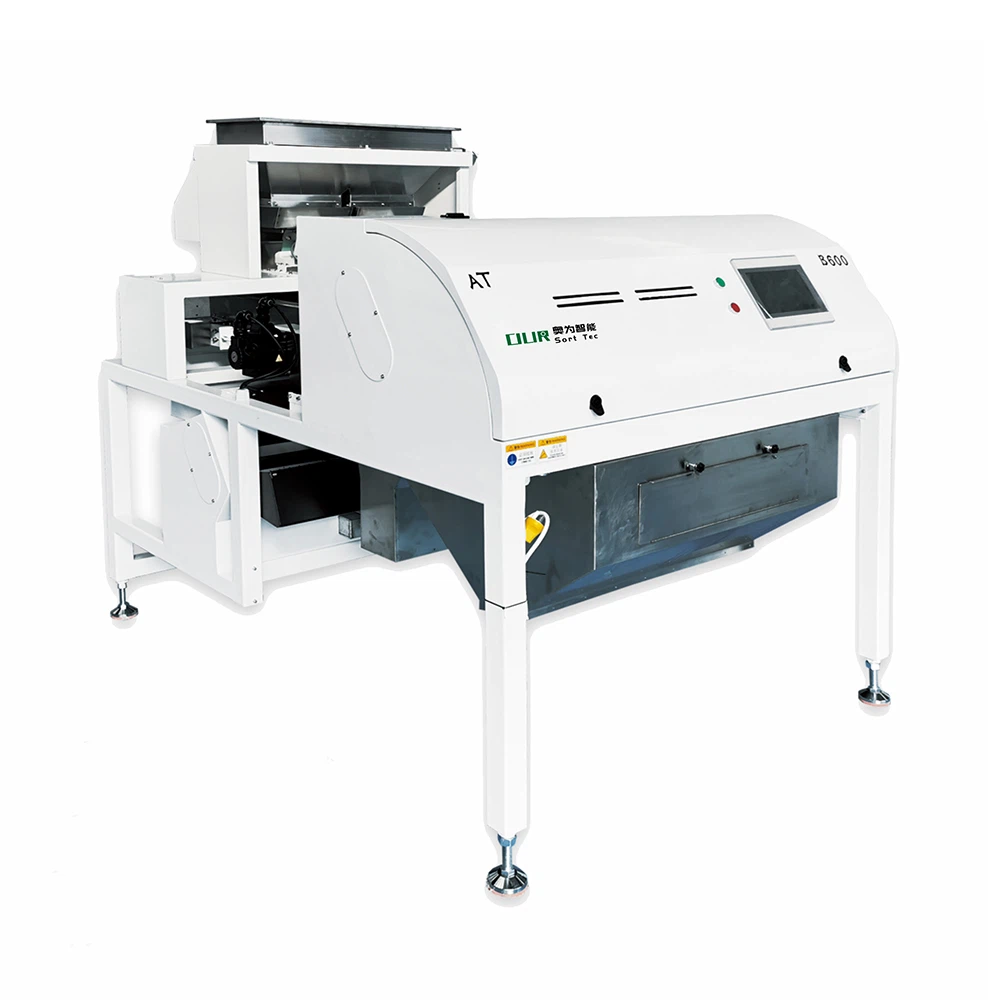
The characteristics of ore sorting mainly include the following aspects:
High sorting accuracy: Ore sorting can accurately separate useful minerals and gangue minerals through various physical and chemical methods. For example, the sorting accuracy of shaking table beneficiation is high, and the enrichment ratio can reach 300.
Wide range of particle size: Different sorting methods are suitable for ores of different particle sizes. For example, gravity separation is suitable for coarse-grained ores, while flotation separation is suitable for fine-grained ores.
Easy to operate: Physical beneficiation methods such as gravity separation and magnetic separation are simple to operate, low-cost, and suitable for simple ores.
Economic benefits: Physical beneficiation methods are usually low-cost and suitable for simple ores; while chemical beneficiation methods are more expensive, but suitable for complex and low-grade ores. The selection of a suitable sorting process requires a comprehensive consideration of the physical and chemical properties of the ore as well as the economic benefits.
Wide range of applications: There are various ore separation methods, including gravity separation, magnetic separation, electrostatic separation, flotation and leaching, which are suitable for different types of ores. For example, magnetic separation is suitable for processing magnetic minerals such as magnetite, while flotation is suitable for processing fine-grained ores and can effectively separate paragenetic minerals.
Environmental impact: Chemical beneficiation methods may cause environmental pollution problems such as wastewater and waste gas, and appropriate environmental protection measures need to be taken. Physical beneficiation methods are relatively environmentally friendly, but have higher requirements on the particle size and properties of the ore.