

A color sorter is a device that automatically sorts out particles of different colors in granular materials using photoelectric detection technology based on the differences in optical properties of the materials. Can perform color selection, shape selection, and light selection; Color sorters are used in the fields of bulk materials or packaging industrial products, food quality testing and grading. The photoelectric color sorter is a non-destructive sorting equipment used for quality inspection and grading of bulk materials. It has a wide range of applications in industries such as grain, food, pigment chemicals, etc. It has significant sorting effects on difficult to sort recycled plastic sheets, plastic particles, corn, various beans, various rice, ore, chili, Sichuan pepper, garlic, melon seeds, raisins, seeds, traditional Chinese medicine, sea rice, shrimp skin, clove fish, glass, metal, same color rod and other malignant impurities and special materials, reaching the international leading level.
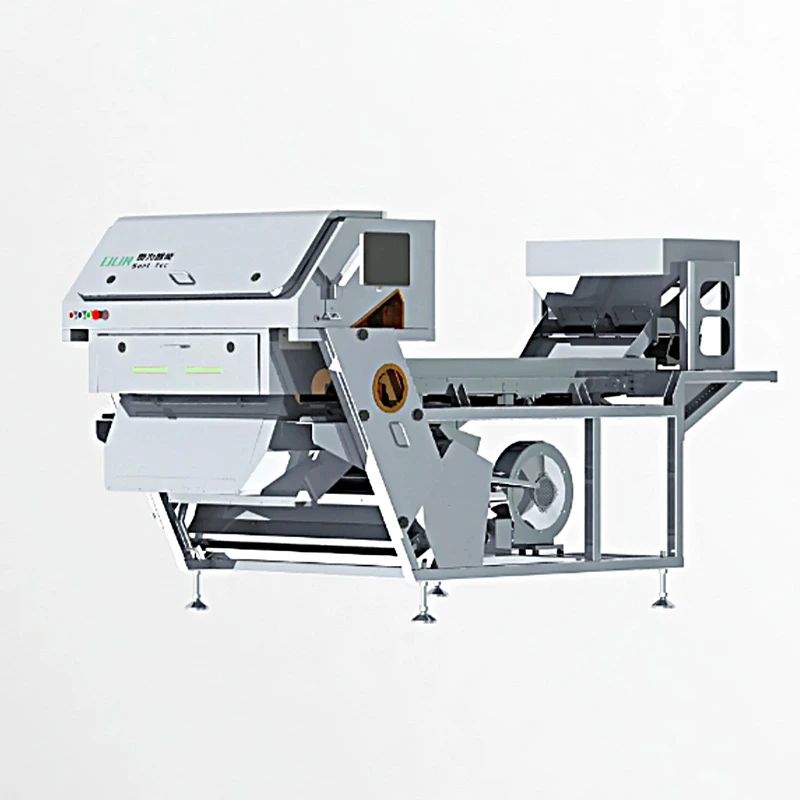
Main technical specifications of color sorter
(1) Processing capacity
The processing capacity refers to the number of materials that can be processed per hour. The factors that affect the processing capacity per unit time are mainly the movement speed of the servo system, the maximum speed of the conveyor belt, and the purity of the raw materials. The servo system has a fast movement speed, which can quickly deliver the actuator to the corresponding position of impurities, thereby increasing the speed of the conveyor belt and increasing processing capacity. Conversely, if the speed is not high, the conveyor belt speed needs to be reduced. The processing capacity per unit time is directly proportional to the speed of the conveyor belt, and the faster the conveyor belt speed, the greater the output. The processing capacity per unit time is also related to the proportion of impurities in the raw materials. If there are few impurities, the larger the interval between two impurities, the longer the reaction time left for the servo system, which can increase the speed of the conveyor belt. The processing capacity per unit time is closely related to the required selection accuracy.
(2) Color selection accuracy
Color selection accuracy refers to the percentage of impurities selected from raw materials to the total amount of impurities contained. The color selection accuracy is mainly related to the speed of the conveyor belt and the purity of the raw materials. The slower the speed of the conveyor belt, the longer the time between adjacent impurities, and the servo system has enough time to remove impurities and improve the color selection accuracy. Similarly, the higher the initial purity of the raw material and the less impurities it contains, the higher the color selection accuracy. At the same time, the color selection accuracy is also limited by the design of the servo system itself. When there are two or more impurities in the same frame image, only one impurity can be removed, resulting in a decrease in color selection accuracy. The use of a double selection structure is better than a single selection structure.
(3) Bring out the comparison
The carryout ratio refers to the ratio of impurities in the waste material selected by the color sorter to the normal material quantity. The height of the output ratio can be adjusted, mainly by adjusting the power on time of the actuator to achieve the adjustment of the output ratio. If the output ratio is set too high, it will affect the two indicators of selection rate and processing capacity; If the setting is too low, the selected waste will contain too many normal materials, which will cause waste; If further processed, it will require a certain amount of manpower and material resources, which will cause a lot of trouble and economic losses.
In the actual production process, the processing capacity, color selection accuracy, and output ratio are all key indicators that must be considered simultaneously.